Fast & Keyrious LLC
Call 821-203-4949
Locked out to back inside in under 30 minutes: complete 2026 workflow
Instead of repeating your lockout details to multiple people, use an emergency lockout workflow that puts safety, the exact address, and authorization first, then connects you directly with the arriving technician. This 2026 guide covers vehicle, home, and business lockouts without promising entry in under 30 minutes.
TL;DR
Fastkeyrious emergency lockout workflow: confirm safety, location, authorization, and the access problem before arranging mobile locksmith service.
Call 911 when someone is in immediate danger; a locksmith request does not replace emergency response.
Confirm the exact service address within 42 miles of Greenville; North Carolina and Wellford are excluded.
Separate keys locked inside from lost keys, broken keys, and electronic-access problems.
Ask the technician about the specific job; do not assume arrival time, vehicle compatibility, or guaranteed damage-free entry.
Why this matters
A lockout call needs more than a city name and a request to open a door. The technician needs to know which door, who can authorize entry, and whether the keys are inside or missing. Missing details create extra calls and leave the actual job unclear.
Fastkeyrious mobile locksmith service is best for customers who want to speak directly with the technician coming to their location. The service handles residential, commercial, and automotive lockouts, with 24-hour emergency response, 7 days a week. That schedule is not an arrival-time guarantee.
Start with Fastkeyrious and explain the access problem before discussing the next step. For a 2026 lockout request, provide the exact address rather than assuming every address in a named town falls inside the service area.
Before you start
Safety and communication: Have a working phone and a safe place to wait. If a child, vulnerable person, or animal faces immediate danger, call 911 and follow the emergency operator's instructions.
Location and access details: Prepare the exact address, a nearby landmark when useful, and the relevant vehicle or door details. The approved service boundary is up to 42 miles from Greenville, South Carolina, excluding North Carolina and Wellford; confirm the specific address with the technician.
Authorization and supporting documents: Be ready to explain your right to access the vehicle or property. The easy-to-miss problem is that your identification, registration, or lease documents might be locked inside; say so before service is arranged, and ask what verification is needed.
Do not test improvised entry methods while gathering this information. Pulling at weatherstripping, forcing a latch, or prying a door can turn an access problem into a repair problem. Describe what happened instead of trying to diagnose the mechanism yourself.
Safety and location check
Assess the immediate risk. State whether anyone is locked inside, whether you are exposed to traffic, and whether there is another urgent hazard. An ordinary lockout and an emergency involving immediate danger need different responses.
Move to a safe waiting position. Stay clear of moving vehicles, loading activity, and doorways that other people need. Keep the locked vehicle or entrance identifiable without standing somewhere unsafe.
Provide the exact location. Give the street address and explain any parking garage, gated entrance, building number, or suite. For a vehicle away from a street address, describe the location clearly enough for the technician to assess it.
Confirm the service boundary. Ask whether the actual location qualifies. Do not treat a town name, county name, or map label as confirmation.
Expected result: The technician has a usable location, understands any safety concern, and can confirm whether the address falls within the approved service boundary.
For 2026 service requests, the exact address matters more than a broad statement such as being near Greenville. A business entrance behind a shopping center and a vehicle in a multilevel garage also need access directions. Share those details during the first conversation.
Do not send a door code or other sensitive access information to an unverified recipient. First confirm that you are communicating with the technician handling your request, then ask which details are necessary.
Lockout details
Name the locked space. Say whether the problem involves a car, truck cab, home, office, or business entrance. For a truck, distinguish cab access from cargo access; one does not establish that the other is supported.
Explain where the keys are. State whether the keys are visible inside, missing, broken, or present but not working. Describe a fob problem separately from a physical key problem.
Identify the vehicle or door. For automotive service, provide the make, model, and model year. For a property, explain whether the locked entrance uses a mechanical key, keypad, credential reader, or another access method.
Describe what changed. Tell the technician whether the door locked behind you, a key stopped turning, or an electronic credential was rejected. Include any attempted entry or visible damage.
Expected result: The technician can distinguish a straightforward lockout from a key-replacement, lock-repair, or electronic-access issue before deciding how to proceed.
For Ford Transit requests, confirm the model year, key type, and exact service with the technician. Fastkeyrious has confirmed Ford Transit lockout and key services, but that does not establish support for every year or key system. It also does not establish Ford Transit Connect compatibility.
Use this distinction when describing the job:
Keys locked inside
Best for: Drivers or occupants who still have usable keys inside
What the workflow addresses: Restoring authorized access
Benefit: Keeps the request focused on entry
Limit or drawback: Entry does not resolve a separate key or lock defect
Lost vehicle key
Best for: Drivers without a usable key
What the workflow addresses: Confirming replacement and programming requirements
Benefit: Identifies the key-service need before work begins
Limit or drawback: Compatibility depends on the specific vehicle and key system
Home or business lockout
Best for: Authorized occupants needing entry
What the workflow addresses: Identifying the entrance and verifying permission
Benefit: Separates access from later security decisions
Limit or drawback: Property or landlord authorization needs confirmation
Electronic-access rejection
Best for: Occupants whose code or credential stopped working
What the workflow addresses: Identifying the access system and responsible administrator
Benefit: Helps avoid treating an account problem as a mechanical lockout
Limit or drawback: Locksmith entry does not automatically restore electronic permissions
Choose the workflow that matches the actual failure, not just the word “lockout.” A door-opening request and a replacement-key request are different jobs. Reporting the wrong problem leaves important requirements unresolved.
Authorization and service confirmation
Explain your connection to the vehicle or property. Say whether you own it, rent it, work there, or act for an authorized manager. Do not assume possession of a phone or knowledge of the address establishes permission.
Ask what verification is required. Explain where your documents are located and whether another authorized person can help verify access. Follow the technician's requirements rather than assuming a particular document is always enough.
Confirm the requested work. Repeat the job in plain language: vehicle entry, residential entry, business entry, or a separate key service. Ask what happens if the technician finds a different problem on arrival.
Get the job terms before work starts. Ask for an estimate, clarify the proposed scope, and have the technician explain any change before you authorize it. Confirm the waiting location and how you will receive updates.
Expected result: You and the technician agree on the requested service, the verification process, and how additional work will be discussed.
Fastkeyrious uses direct technician communication rather than dispatch-center middlemen. The practical advantage is that you can explain the door, vehicle, and access conditions to the person coming. The limit remains important: a phone description cannot settle every condition the technician will find on site.
Ask for a current arrival estimate if you need one, but do not treat an estimate as a deadline. In 2026, a useful emergency lockout workflow confirms the job before arrival; it does not turn an uncertain service duration into a guaranteed countdown.
Discuss your lockout with the technician
Explain the location, locked space, and authorization before arranging mobile service.
Entry and function check
Meet the technician safely. Point out the correct vehicle or entrance and complete the requested verification. For a business, identify the authorized contact if someone else controls access approval.
Review the proposed work. Let the technician assess the lockout and explain the approach. Ask about relevant risks and alternatives without expecting a guaranteed damage-free result.
Check access before ending the visit. Once entry is restored, retrieve the keys and test their normal operation with the door open or another safe access route maintained. Do not immediately close the only working entrance behind you.
Separate any follow-up repair. If the key, latch, or lock still malfunctions, discuss that as a distinct issue. Opening a door does not prove the hardware or electronic system is functioning correctly.
Expected result: You regain authorized access, check the normal locking method, and understand whether another service is needed.
The sequence is simple enough to keep on your phone. Its value comes from doing the checks in order rather than rushing straight to a door-opening request.
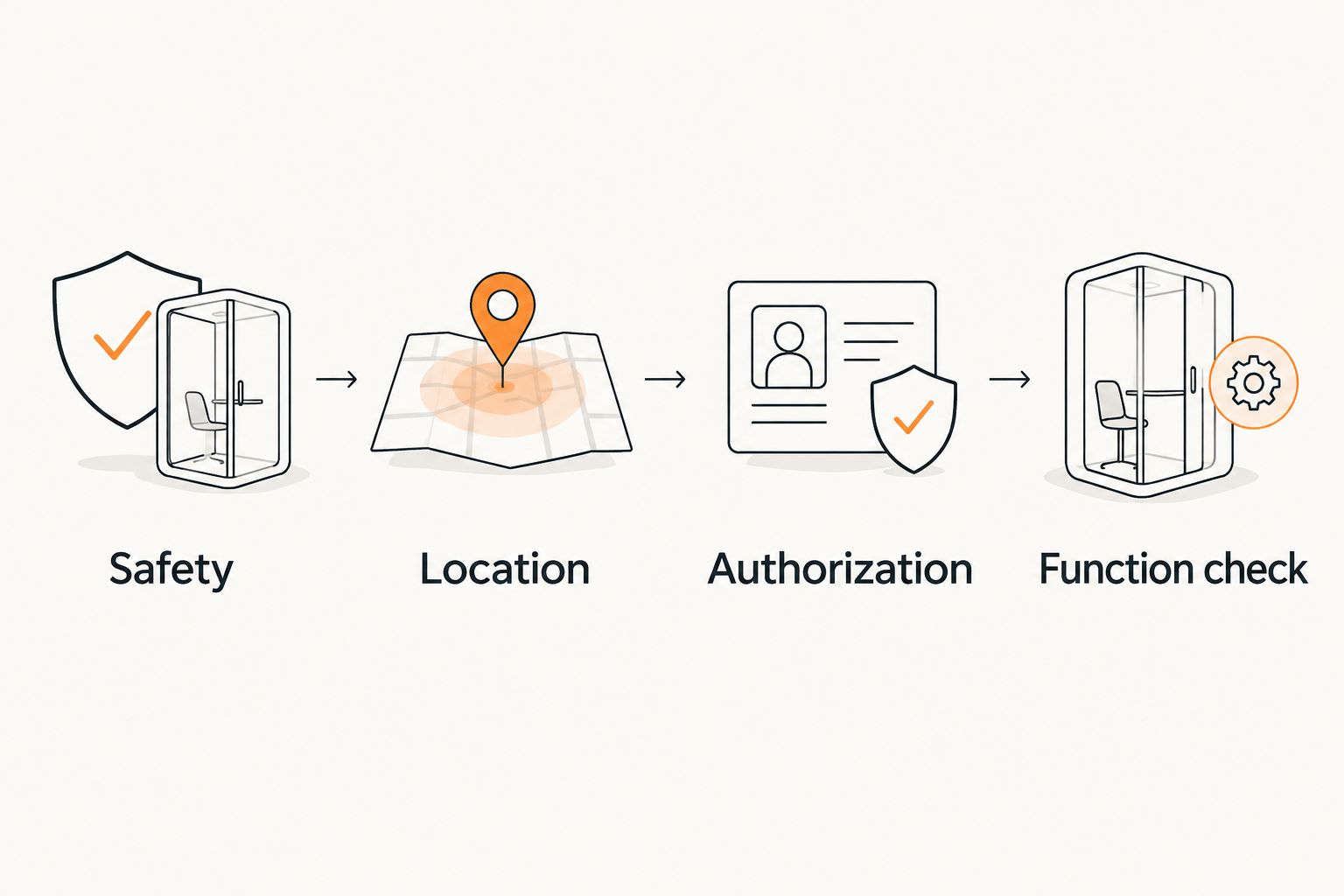
Confirm permission before entry, then check normal operation before ending the visit.
When the keys are missing instead of locked inside
A missing-key request needs a different conversation. Entry can get you into the vehicle, but it does not supply a usable key. Tell the technician that you need key replacement before arranging a lockout-only visit.
Gather the vehicle make, model, model year, and any information you have about the previous key or fob.
Explain whether a spare exists and whether it operates the vehicle normally.
Ask the technician to confirm the exact replacement or programming service supported for that vehicle.
Discuss entry and key service as separate needs when both are required.
Expected result: The service request reflects the missing-key problem rather than stopping at vehicle entry.
The guide to making a car key without the original explains the related question. It does not replace a compatibility check for your vehicle. Keep the model year and key details ready when speaking with the technician.
For a home or business, a missing key also raises a security question: who might still have access? Rekeying changes which key operates an existing compatible lock; lock replacement changes the hardware. Neither decision should be bundled into a simple entry request without discussion.
Troubleshooting
Your identification is locked inside
Tell the technician before the visit is arranged. Ask what alternative verification is acceptable and whether verification can be completed after authorized entry. Do not assume a universal exception applies.
The technician cannot identify the entrance
Clarify the building, suite, parking location, and door. For an office, distinguish the exterior entrance from the tenant's suite door. Explain access restrictions without sharing credentials unnecessarily.
Your office credential or keypad code does not work
Contact the person responsible for the building's access permissions. Explain whether a mechanical lock is also involved. A locksmith request does not automatically resolve an expired credential, disabled user account, or building-managed access issue.
Your truck request was described only as “vehicle entry”
Specify whether you need the cab, cargo area, or another locked compartment opened. Give the truck details and ask the technician to confirm the exact supported work. Do not assume trailer locks or every compartment are covered.
The key still sticks after entry
Keep a safe access route open and report the symptom before closing the door again. Ask the technician to assess the key and lock. Repeating the same action with a malfunctioning lock can leave you locked out again.
Customize your workflow
For your 2026 household or workplace plan, record the information that is hardest to retrieve during a lockout: the authorized contact, building access instructions, and the location of supporting documents. Store it securely where an authorized person can reach it without entering the locked space.
Home: Decide who can authorize service and where an authorized spare key will be kept.
Business: Identify who approves entry, whether the landlord controls the exterior door, and who manages electronic credentials.
Vehicle or truck: Keep the vehicle details accessible and distinguish cab entry from cargo access in your instructions.
Keep access restoration and prevention separate. A lockout visit addresses the immediate problem; rekeying, replacement, and spare-key arrangements address different risks. Choose follow-up work based on the actual cause, not on an automatic upgrade recommendation.
FAQ
What's the best emergency lockout workflow?
The best emergency lockout workflow starts with safety, confirms the exact location and authorization, then identifies the specific access problem. Speak directly with the technician and check normal key or lock operation after entry.
Can a locksmith get me back inside in under 30 minutes?
Do not treat entry in under 30 minutes as guaranteed. Ask the technician for a current arrival estimate and an assessment of the specific lockout; arrival and completion are separate parts of the job.
What should I do if a child is locked inside a car?
Call 911 if the child faces immediate danger and follow the emergency operator's instructions. A mobile locksmith request does not replace emergency response.
What if my identification is locked inside my home or car?
Tell the technician before arranging service and ask what verification is required. Do not assume that documents locked inside automatically remove the need to verify authorized access.
Does Fastkeyrious cover every address near Greenville?
Confirm the exact address with the technician. The approved boundary is up to 42 miles from Greenville, South Carolina, excluding North Carolina and Wellford; a city name alone does not confirm coverage.
Can I request help for a Ford Transit lockout?
Ford Transit lockout and key services are confirmed, but the specific model year, key type, and requested work need technician confirmation. Do not assume every Ford Transit key system or Ford Transit Connect is supported.
Should I rekey or replace a lock after a lockout?
Base the decision on the cause of the lockout and the condition of the hardware. Rekeying changes the working key for an existing compatible lock, while replacement changes the lock itself; restoring entry alone does not establish that either is necessary.
One last thing
Test the key with the door open before you close your only access route. Getting inside is the immediate goal, but confirming normal operation is what keeps the same malfunction from ending the visit with another lockout.