Fast & Keyrious LLC
Call 821-203-4949
Deadbolt installation: what affects your estimate?
A deadbolt installation estimate depends on whether you are replacing an existing lock or adding one, the hardware selected, and the condition of the door and frame. Door preparation, alignment repairs, and key matching need separate confirmation; do not assume the initial estimate includes them. Ask for a written scope before authorizing installation.
TL;DR
A deadbolt installation estimate should separate hardware, installation labor, door preparation, and repairs.
Replacement, new installation, and rekeying solve different problems; compare estimates for the same scope.
Fastkeyrious offers direct technician contact; confirm deadbolt installation support for your specific door before scheduling.
Send door photos, describe existing hardware, and confirm property authorization before approving changes.
Why this matters
A new lock does not automatically fix a door that drags, a damaged frame, or a bolt that misses its strike opening. If the estimate covers only replacing hardware, those problems remain separate work. Describe how the door behaves, not just which lock you want.
Fastkeyrious is best for local locksmith customers who want to speak directly with the arriving technician. Start with Fastkeyrious to confirm whether the technician supports your proposed deadbolt work and exact address. Service coverage is up to 42 miles from Greenville, South Carolina, excluding North Carolina and Wellford; an address still needs confirmation.
Deadbolt installation: what affects your estimate?
The main distinction is the work being requested. Replacing a deadbolt in suitable existing openings is different from preparing a door that has never had one. Rekeying is different again: it changes which key operates compatible existing hardware rather than adding a deadbolt.
Use this comparison to describe your request accurately. These are service categories to discuss, not promises that every door or lock is supported.
Existing deadbolt replacement
Best for: Replacing worn hardware in a prepared door
Main advantage: Uses existing preparation when compatible
Limitation to confirm: New hardware might require changes to the openings or strike
New deadbolt installation
Best for: Adding a deadbolt to a suitable door
Main advantage: Adds a separate locking point
Limitation to confirm: Door and frame preparation require assessment
Rekeying
Best for: Changing key access while keeping serviceable hardware
Main advantage: Retains the existing lock
Limitation to confirm: Does not repair wear, damage, or poor alignment
Door or strike correction
Best for: Addressing binding or misalignment
Main advantage: Addresses the fit problem affecting operation
Limitation to confirm: Does not necessarily require or include a new lock
Compare estimates only after the service scope matches. An estimate for rekeying is not an alternative installation estimate unless your actual goal is simply to stop an old key from working.
What should the written estimate separate?
Ask the technician to identify these items rather than combining everything under a vague installation description:
Hardware: Who supplies the deadbolt, and which exact hardware is being considered?
Installation labor: Does the scope cover replacement, fresh preparation, or both?
Door and frame work: Are drilling, strike adjustments, and identified repairs included?
Key work: Is rekeying or matching a compatible existing key part of the request?
Visit-related charges: Are any service-call or scheduling-related charges included?
Scope changes: What happens if inspection reveals a problem that photos did not show?
Request approval before additional work begins. A clear estimate identifies both the intended result and the work excluded from it.
Existing deadbolt replacement: confirm the fit
Replacing an existing deadbolt starts with checking the current preparation. A similar-looking replacement is not proof that the openings, door thickness, and hardware dimensions match. Give the technician the lock's manufacturer and model if you can identify them without taking it apart.
Describe any operating problem precisely. Does the key turn normally with the door open but resist with it closed? Does the door need lifting or pushing before the bolt moves? Those details help separate a hardware problem from a door-fit problem.
Ask whether the estimate assumes that the existing openings and strike can be reused. Also ask what would trigger a revised scope. Do not treat replacement as an automatic fix for a misaligned door.
New deadbolt installation: confirm door preparation
Adding a deadbolt to a door without an existing opening requires a different assessment. The technician needs to consider the door construction, available installation space, frame condition, and the selected hardware's installation instructions. Sending a picture of the new lock alone is not enough.
Photograph both faces of the door, the latch edge, and the frame where the bolt would engage. Include a wider view showing nearby glass and existing handles or locks. Do not drill exploratory holes or remove structural parts to help prepare the estimate.
For a rental or commercial entrance, confirm approval before any permanent alteration. A proposed deadbolt must also be evaluated for the door's use and applicable exit requirements. Do not select hardware solely because it fits the available space.
Rekeying: confirm whether installation is necessary
If the deadbolt works properly and your concern is an old key, ask about rekeying before requesting replacement. Rekeying changes the internal keying of a compatible lock. It does not add a locking point or correct damaged hardware.
Explain whether you want a new key or want the deadbolt to use another existing key. Key matching depends on compatible hardware; a matching finish or similar key shape does not establish compatibility. Bring the relevant working keys for assessment.
The distinction matters after a move, tenant change, or missing key. The guide to rekeying versus replacing a lock explains the separate purposes. Choose the service that addresses the access problem, not just the service name you first searched.
Why deadbolt installation estimates vary
The details below change the work involved. Use them to explain your door and compare the assumptions behind different estimates.
Existing preparation: A door with suitable openings presents a different job from one requiring new preparation. Ask whether the estimate assumes reuse.
Door and frame condition: Binding, loose hardware, damaged wood, or movement at the frame needs assessment. Identify repair work separately from lock installation.
Hardware compatibility: Door thickness, lock dimensions, and existing preparation determine fit. Confirm the selected hardware before purchasing it for the job.
Keying requirements: A new key, rekeying, and matching other locks are distinct requests. State which result you need before comparing estimates.
Property requirements: A rented home, shared entrance, or business door can require owner approval and hardware review. Permission to enter is not permission to alter locks.
Scheduling and access: Explain whether this is planned work or a current lockout. Ask whether entry, installation, and any visit-related charges are separate parts of the estimate.
Fastkeyrious provides 24/7 emergency response, but that does not establish an installation appointment or arrival time. Confirm the specific work and scheduling directly with the technician.
What should you send before requesting an estimate?
Prepare a short description that lets the technician distinguish the job from a generic lock request. Keep security-sensitive details out of public posts; send necessary information through the business's confirmed contact method.
Identify the door. State whether it serves a home, office suite, shared entrance, or another space. Explain whether a deadbolt is already installed.
Describe the problem. Say whether the hardware is broken, an old key needs to stop working, or you want to add a lock. Mention binding or difficulty closing.
Send clear photos. Include the inside, outside, door edge, and strike area. Photograph visible damage without dismantling the lock.
Identify the hardware. Share any readable manufacturer or model information. If you already purchased a deadbolt, send its exact identification and installation information.
Confirm authorization. Explain whether you own the property or have approval to change the lock. For a business, identify the person authorized to approve the work.
Confirm the address. Provide the actual service location rather than relying on a city name. Ask the technician to verify coverage and the proposed job.
These details support an initial assessment, not a substitute for inspecting the door. Ask which parts of the estimate remain conditional on that inspection.
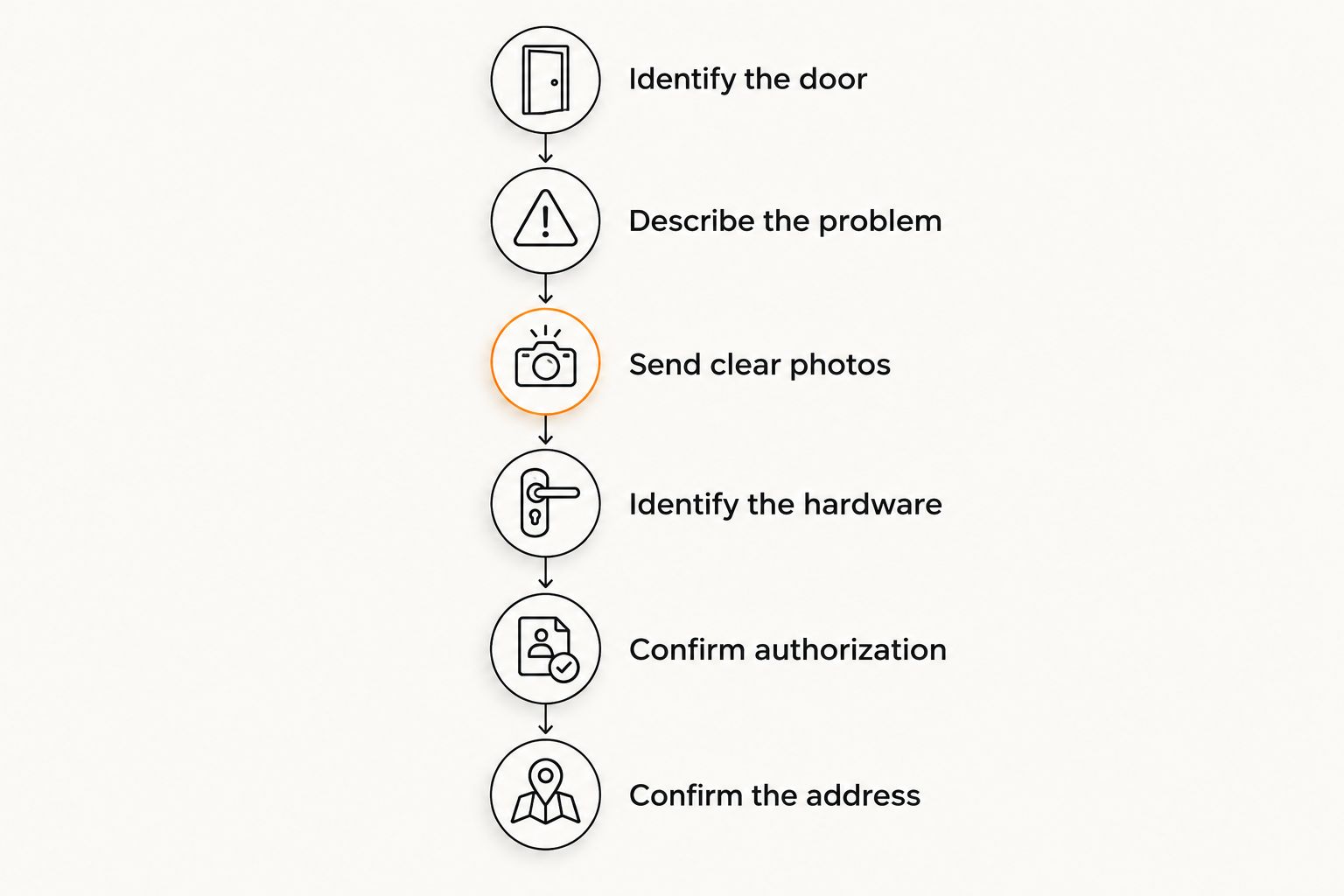
Describe the door, hardware, access problem, and authorization before requesting an estimate.
Who can approve a deadbolt change?
Being able to open a door does not establish authority to change its locks. Before scheduling permanent work, identify who controls the property and who can authorize alterations. Keep that approval available when the technician arrives.
If you rent your home
Check the lease and obtain the property owner's or manager's approval before replacing hardware or drilling. Confirm whether management requires a particular lock arrangement or needs access afterward. Do not assume a removable-looking lock is exempt from those requirements.
If you manage an office or business
Identify whether the door is your suite entrance, a shared building entrance, or an exit used by others. Ask the landlord or authorized facilities contact about permitted changes. An employee's access credential does not authorize changes to shared hardware.
Keep mechanical and electronic work separate. Rekeying a cylinder does not delete keypad codes or electronic credentials. If the door has electronic access equipment, describe it and confirm the supported scope rather than assuming a deadbolt installation includes electronic-access work.
What should you check before accepting the work?
Ask for an operating demonstration before the technician leaves. Start with the door open, then check operation with the door closed. This helps reveal whether the hardware works by itself but binds against the frame.
Confirm these points with the technician:
The key and interior control operate as intended.
The bolt extends and retracts without forcing the door into position.
The door closes and latches normally.
Hardware is secure and no part visibly interferes with the handle or trim.
Supplied keys work, and any agreed key-matching requirement is satisfied.
Removed hardware, unfinished repairs, and any follow-up work are accounted for.
If the job included rekeying, ask to verify that the previous key no longer operates the rekeyed lock when that key is available. For shared properties, follow the approved key-handover arrangement.
A working key alone is not a complete installation check. The door, bolt, and strike need to work together when the door is closed.
FAQ
What should a deadbolt installation estimate include?
A deadbolt installation estimate should identify hardware, installation labor, door preparation, key work, and any separate repairs or visit-related charges. Ask which assumptions require an on-site inspection and how additional work will be approved.
Can I get a deadbolt installation estimate from photos?
Photos support an initial assessment, but they do not establish every installation detail. Send views of both door faces, the edge, the strike, and visible hardware, then ask what remains conditional on inspection.
Is replacing a deadbolt the same as installing a new one?
Replacing a deadbolt uses existing preparation when the replacement fits; adding a new deadbolt requires assessing where and how to prepare the door and frame. Compare estimates only when they describe the same work.
Should I rekey my deadbolt instead of replacing it?
Rekeying is appropriate to discuss when compatible hardware works properly and your goal is to change which key opens it. Replacement addresses a different need, such as damaged hardware; neither automatically fixes door alignment.
Can I buy the deadbolt before calling a locksmith?
Confirm compatibility before buying the deadbolt. Ask the technician to review the exact hardware, door construction, existing preparation, and any property requirements first.
Can a tenant authorize deadbolt installation?
A tenant should confirm lease requirements and obtain the required property approval before changing hardware or drilling. Permission to occupy or enter the property does not automatically authorize lock alterations.
Does rekeying a deadbolt remove electronic access codes?
Rekeying a mechanical cylinder does not remove electronic access codes or credentials. Treat electronic access changes as a separate request and confirm who is authorized and equipped to handle them.
Can Fastkeyrious assess my local locksmith request?
Fastkeyrious offers direct contact with the arriving technician; confirm support for your specific deadbolt request before scheduling. Coverage is up to 42 miles from Greenville, South Carolina, excluding North Carolina and Wellford, with exact-address confirmation required.
One last thing
Before requesting a new deadbolt, notice whether the current lock works differently with the door open and closed. Tell the technician what you observe without forcing the key or bolt. That simple distinction helps keep a hardware replacement request from overlooking a door-fit problem.