Fast & Keyrious LLC
Call 821-203-4949
Is it cheaper to rekey a lock or replace it?
Rekeying is generally cheaper than replacing a lock when the existing hardware works properly and supports rekeying. It changes which key opens the lock without requiring a new lock assembly. For your 2026 decision, compare the complete job: access to a locked door, damaged hardware, incompatible cylinders, and additional doors can change which option makes sense.
TL;DR
Is it cheaper to rekey a lock or replace it? Rekey working, compatible hardware; replace damaged or unsuitable locks.
Rekeying changes key access, not the lock’s condition or security features.
Lock replacement makes sense when you need different hardware or the existing lock cannot be rekeyed.
Fastkeyrious offers residential and commercial rekeying with direct technician contact; confirm your exact address before arranging service.
Is it cheaper to rekey a lock or replace it?
Rekeying usually involves less material expense because you keep the installed hardware. Replacement adds new hardware and the work needed to remove the old lock, fit the replacement, and check its operation. That makes rekeying the practical starting point when your only goal is stopping an old key from working.
Do not replace a functioning lock just because someone else has a key. First, ask whether the cylinder can be rekeyed and whether the rest of the lock is in good condition.
Rekeying
Best for: Changing key access on a working, compatible lock
Main advantage: Keeps the existing hardware
Main limitation: Does not repair wear or add new features
Lock replacement
Best for: Damaged hardware or a needed hardware change
Main advantage: Lets you replace an unsuitable lock
Main limitation: Requires new hardware and a fit check
Selective replacement plus rekeying
Best for: Properties with a mix of sound and damaged locks
Main advantage: Matches the work to each door
Main limitation: Requires a separate assessment of each lock
Fastkeyrious provides mobile residential and commercial rekeying. Describe the access problem and the condition of the lock when you speak directly with the technician.
Why this matters
A cheaper job is not a better job if it leaves you with a lock that sticks, fails to latch, or does not meet your needs. Separating an access problem from a hardware problem keeps the decision clear.
If the hardware works and an unauthorized person has a key, address key access. If the hardware is damaged, address the damage. If both problems exist, the finished job needs to solve both—not simply give you a different key.
Rekeying: best for changing who has key access
Rekeying changes the internal key configuration of a compatible cylinder so a different key operates it. The lock stays installed, and the previous key no longer operates the rekeyed cylinder.
This is useful after moving into a home, losing track of spare keys, or changing who should have access to a business. You do not need to know whether someone copied an old key before deciding to retire it.
The advantage is straightforward: you avoid replacing sound hardware solely to change access. The limitation is equally important. Rekeying does not strengthen the door frame, repair a worn latch, or turn an ordinary mechanical lock into an electronic lock.
Before choosing rekeying, tell the technician whether the key turns smoothly and whether the door closes and locks normally. Mention any sticking, looseness, or visible damage. Choose rekeying when the hardware is sound and the problem is the old key.
Lock replacement: best for damaged or unsuitable hardware
Replacement means removing existing lock hardware and installing suitable replacement hardware. It is the appropriate direction when the current lock is broken, cannot be rekeyed, or lacks a feature you actually need.
Do not assume that a stiff key automatically means the entire lock needs replacement. Door alignment, the cylinder, and other components need separate checks. A replacement lock alone does not correct a door that is sagging or a strike plate that is out of position.
The advantage of replacement is the opportunity to address unsuitable hardware. The drawback is that the replacement must fit the door and work with its existing preparation, thickness, and other hardware.
For a 2026 replacement decision, name the problem before choosing a product: unreliable locking, damaged components, or a specific access requirement. Replace for a hardware reason, not simply because the key needs changing.
Selective replacement: best for mixed-condition locks
You do not have to make the same choice for every door. A property can have a sound front-door deadbolt, a worn side-door lock, and a separate office entrance with different hardware.
Ask for a door-by-door recommendation. Keep and rekey the compatible locks that work; replace the ones that need replacement. This avoids treating one damaged lock as a reason to discard all the others.
The limitation is key compatibility. Keeping several existing locks does not automatically mean they can all use one key. The technician needs to identify the cylinders and keyways before confirming a shared-key arrangement.
Why the total job cost varies
Compare estimates for the same scope of work. A rekeying estimate for an accessible, working lock is not equivalent to an estimate that includes opening a locked door and replacing damaged hardware.
For a useful 2026 estimate, explain these factors:
Number of cylinders: Identify each keyed cylinder, not just each door. A door can have more than one keyed lock.
Hardware condition: Report sticking, loose parts, damage, and problems closing or latching the door.
Existing access: Say whether the door is open, locked, or inaccessible and whether you have a working key.
Key compatibility: Explain whether you want separate keys or one key for multiple locks.
Replacement requirements: Describe the hardware change you need rather than assuming any new lock will fit.
Service location: Provide the exact address so the technician can confirm coverage before scheduling.
Ask what work the estimate includes. Separate entry, rekeying, replacement hardware, installation, and supplied keys instead of comparing two totals that describe different jobs.
Compare rekeying and replacement estimates for the same doors
Ask each provider to define the work on the same cylinder list. A quote for rekeying accessible, functioning locks is not equivalent to replacing damaged hardware after a lockout. The total only becomes useful once those differences are clear.
Which locks are included?
Rekeying estimate: Identify each cylinder being rekeyed
Replacement estimate: Identify each hardware assembly being changed
What happens to the old key?
Rekeying estimate: Confirm the serviced cylinders use the new key arrangement
Replacement estimate: Confirm the installed hardware and finished key arrangement
Is entry separate?
Rekeying estimate: State whether the doors are already accessible
Replacement estimate: State whether entry is needed before installation
Is hardware condition addressed?
Rekeying estimate: Report wear or binding before keeping the existing lock
Replacement estimate: Confirm the reason and fit for replacement
What needs separate approval?
Rekeying estimate: Keys, additional cylinders, or unexpected hardware work
Replacement estimate: Additional door work or changes to the selected hardware
Compare a complete job, not a per-lock label. If the goal is retiring old keys, suitable working hardware can remain. If the goal is correcting damage, ask how the proposed work addresses that damage. Test each agreed lock before the visit ends.
How do you decide which service to request?
Use this sequence before authorizing work. You do not need to take a lock apart or identify every internal component; you need to explain what changed and what is wrong.
Check access. Say whether you can enter the property and whether you have a working key. If you are locked out, opening the door is a separate need from changing future key access.
Check condition. Describe how the key turns, how the door closes, and whether anything is loose or damaged. Do not force a sticking key.
Set the goal. Decide whether you need to retire old keys, repair unreliable hardware, or change how people enter.
Confirm authority. Establish who can approve work, especially for rentals, offices, and shared entrances.
Compare scope. Ask for the recommended work on each lock and confirm what the estimate covers before proceeding.
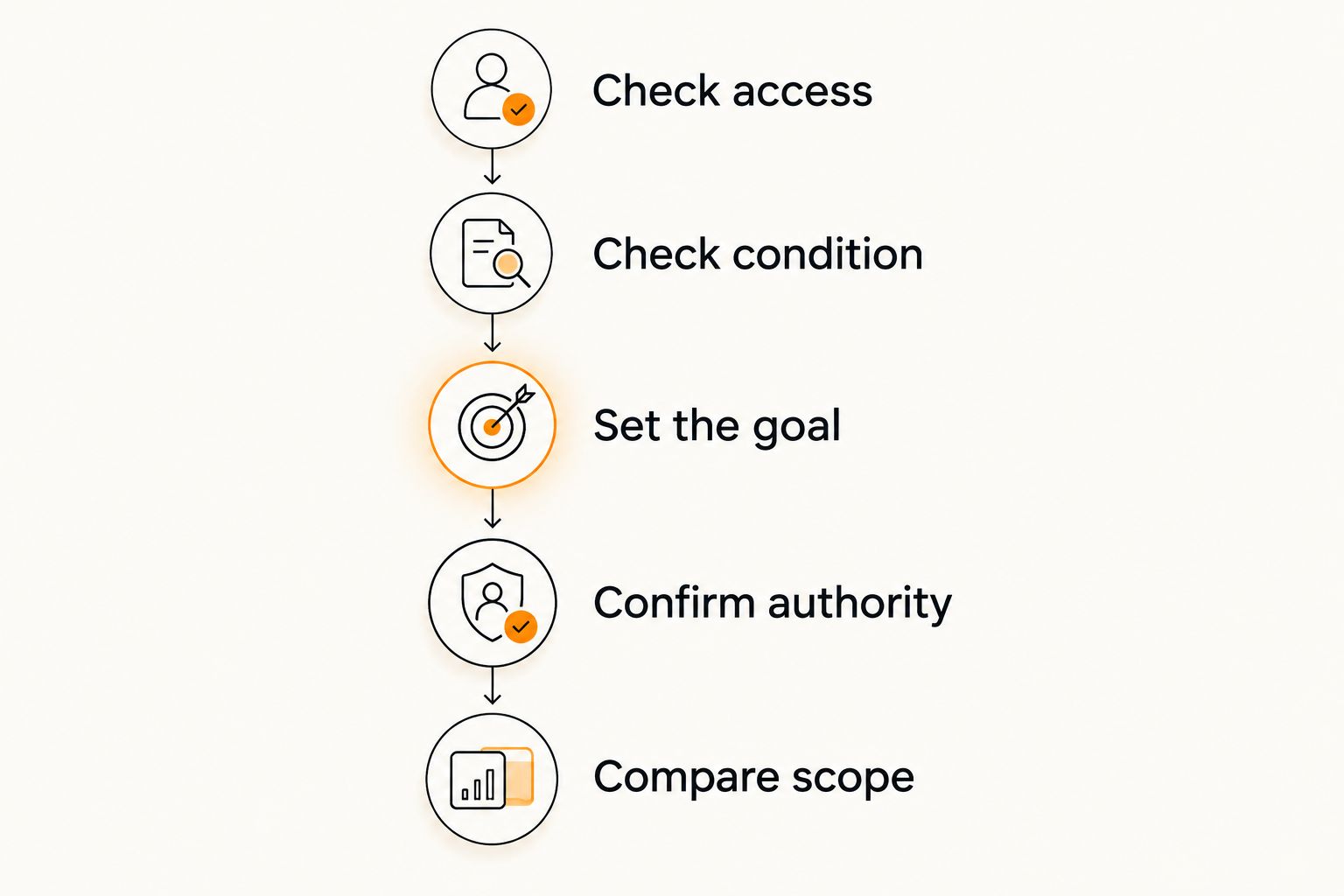
Start with the access problem and hardware condition before choosing the service.
A photo of the lock and both sides of the door can help you explain the setup. It does not replace an on-site assessment. Avoid sending a picture of your key’s cuts when a picture of the hardware answers the question.
Should you rekey or replace locks after moving into a home?
Rekey working, compatible locks when your main concern is unknown copies of the previous key. Buying a home does not tell you who still holds a spare, and collecting the keys handed over at closing does not account for every possible copy.
Make an inventory of keyed entry points before arranging service. Include exterior doors and any separate keyed entrance you intend to secure. Identify locks that already operate poorly so the technician can separate access changes from repairs.
Replacement makes sense where the hardware is damaged or unsuitable. Do not assume every lock needs replacing because the property changed hands. The useful result is controlled key access and dependable operation, not a pile of new hardware.
Can a tenant rekey a rental lock?
A tenant should check the lease and obtain any required written approval before rekeying or replacing a lock. Ownership and access obligations are separate from whether the work is technically possible.
For a rental change in 2026, confirm who authorizes the work, who receives the new keys, and whether the landlord has a required hardware arrangement. Do not remove existing hardware or change access first and resolve permission afterward.
Property managers should also distinguish a tenant’s private entrance from shared doors. A change to one unit does not automatically authorize work on a common entrance or another tenant’s lock.
Is rekeying enough for an office or business?
Rekeying is appropriate when a business needs to retire mechanical keys and the existing locks remain suitable. An employee departure, lost key, or change in authorized users creates an access question; it does not automatically create a hardware defect.
Identify the exact door: the building entrance, your suite entrance, an interior office, or a storage room. Confirm whether the business owner, landlord, or property manager controls that lock before requesting changes.
Also distinguish mechanical keys from electronic access. Rekeying a cylinder does not deactivate a keypad code, card, or electronic credential. Those access methods need their own review with the person responsible for the system.
Do not replace commercial hardware solely because a residential-style replacement looks simpler. Door use, exit requirements, existing hardware, and landlord approval belong in the assessment.
Can all your locks use the same key after rekeying?
Compatible locks can often be rekeyed to use the same key, but not every group of locks is compatible. Keyway and cylinder differences matter, even when the locks look similar from the outside.
Tell the technician which doors you want on the same key. Keep separate access needs separate: a key for a shared entrance should not automatically open a private office or another restricted space.
If one lock is incompatible, ask whether changing that lock would meet your goal. You do not necessarily need to replace every lock to simplify your key ring.
Does rekeying improve security as much as replacement?
Rekeying improves control over who can use a mechanical key. Replacement changes the hardware. Neither description, by itself, proves that the whole entrance is secure.
A rekeyed cylinder still depends on the existing lock, door, frame, strike, and installation. A new lock also depends on those surrounding components. If the door does not close or latch properly, include that problem in the assessment.
Choose the fix that addresses the actual weakness. Retiring an old key and correcting damaged hardware are different jobs, and a property can need both.
What should you confirm before requesting local service?
Fastkeyrious is best for local homeowners and businesses seeking mobile rekeying with direct technician contact. The service area extends up to 42 miles from Greenville, South Carolina, with particular emphasis on Greer and the surrounding area.
Confirm the exact service address; a town name alone does not establish coverage. North Carolina and Wellford are excluded. Do not assume every address in a nearby city or county falls within the approved boundary.
Direct contact lets you explain the door and key problem to the technician who will arrive. It does not establish hardware compatibility or an arrival time in advance. Confirm the location, authorization, and proposed scope before arranging work.
Discuss your lock change
Explain the lock condition, access problem, and exact address directly to the technician.
FAQ
Is it cheaper to rekey a lock or replace it in 2026?
Rekeying is generally cheaper when the existing lock works properly and supports rekeying. Replacement becomes the appropriate choice when hardware is damaged, unsuitable, or cannot be rekeyed.
Does rekeying stop my old key from working?
Yes, the previous key no longer operates a correctly rekeyed cylinder. Other locks that were not rekeyed remain unchanged.
Should I replace every lock after buying a house?
No, working and compatible locks can be rekeyed to change key access. Have damaged or unreliable hardware assessed separately rather than replacing everything automatically.
Can a locksmith rekey a lock without the original key?
Some locks can be rekeyed without the original key, but the method depends on the hardware and whether the door is accessible. Tell the technician that the key is missing before arranging the work.
Will rekeying fix a lock that sticks?
Rekeying alone is not a repair for a sticking lock. The cylinder, latch, door alignment, and other components need assessment to identify the cause.
Can rekeying make all my doors use one key?
Rekeying can put compatible locks on one key. Different keyways or unsuitable cylinders can require a hardware change, so compatibility needs confirmation.
Does rekeying an office lock cancel keypad codes?
No, rekeying a mechanical cylinder does not cancel electronic codes or credentials. Review electronic access separately with the person responsible for that system.
Can Fastkeyrious confirm rekeying service at my address?
Fastkeyrious can confirm your exact address against its approved service area of up to 42 miles from Greenville, South Carolina. North Carolina and Wellford are excluded; do not rely on a city name alone.
One last thing
A new key is not proof that every old access route has been removed. A separate deadbolt, shared entrance, spare-key box, or electronic credential needs its own check.
Before the job ends, test each changed lock with the door open and then closed. Confirm which keys operate which doors and who should receive them. Judge the finished job by controlled access and reliable operation—not simply by whether the hardware is new.