Fast & Keyrious LLC
Call 821-203-4949
Can a locksmith open a safe without the combination?
Yes—a locksmith who specializes in safes can often open a safe without the combination, but the method depends on the safe and its condition. Opening the door does not necessarily include repairing the lock, setting a new combination, or returning the safe to usable condition. Confirm safe-specific experience and authorization requirements before scheduling service.
TL;DR
Can a locksmith open a safe without the combination? A safe specialist often can; the model determines the approach.
Manufacturer recovery is worth checking before authorizing physical work on a locked safe.
Fastkeyrious provides mobile locksmith services; safe-opening service is not confirmed.
Ask whether the estimate includes entry, repairs, replacement parts, and a working combination.
Can a locksmith open a safe without the combination?
Yes, but choose a safe specialist—not simply the first locksmith who handles door lockouts. Safe locks, protective features, and recovery procedures differ from residential door hardware. Describe the safe before booking so the provider can confirm whether the job fits their experience.
Fastkeyrious provides mobile locksmith services for vehicle, home, and business access needs. Those services do not establish safe-opening capability; confirm that specialty separately rather than assuming every locksmith handles it.
Start with the problem you actually have. A forgotten combination is different from a correct combination that no longer opens the door, and a blank keypad is different from a rejected code.
Forgotten combination with identifiable safe information
Best for: Owners with accessible model details
Useful first route: Ask the manufacturer about documented recovery
Benefit: Establishes whether an official recovery process exists
Limitation: Recovery is not available for every safe or ownership situation
Electronic keypad that does not respond
Best for: Owners reporting a power or keypad symptom
Useful first route: Follow the model's official troubleshooting instructions
Benefit: Separates a possible power issue from a forgotten-code problem
Limitation: Restoring power does not recover an unknown combination
Mechanical dial with an unknown combination
Best for: Owners needing physical diagnosis
Useful first route: Consult a safe specialist
Benefit: Matches the job to safe-lock experience
Limitation: Entry method and repair needs require assessment
Working code but door will not open
Best for: Owners with a possible mechanical fault
Useful first route: Stop forcing the handle and describe the symptoms
Benefit: Helps distinguish access-code problems from door or lock trouble
Limitation: The combination alone does not explain the failure
Why this matters
The wrong service request creates the wrong expectation. Asking someone to open a safe does not automatically mean you are authorizing drilling, replacement parts, or permanent changes to the container.
A useful booking conversation establishes the desired outcome: access to the contents, continued use of the safe, or both. Tell the provider which outcome matters before agreeing to work.
Do not treat a safe as an ordinary locked cabinet. Avoid prying, striking the door, or trying online bypass tricks. Physical damage can complicate diagnosis and leave you with a separate repair problem.
Forgotten combination: start with identification
Best for: an owner who can identify the safe and document ownership. Look for an externally visible brand, model, or serial label without moving a heavy safe or disturbing its mounting. Photograph the front, lock, handle, and any accessible identification label.
Contact the manufacturer through its official support channel and ask whether recovery assistance exists for that model. Ask what documents are required and whether the process applies to a locked safe, not just changing a combination while the door is open.
The advantage is a model-specific starting point. The limitation is that a manufacturer does not necessarily retain a recoverable combination or provide an access procedure for every product.
Do not post identification labels, combinations, or ownership paperwork publicly. Share them privately with the manufacturer or the professional evaluating the job.
Electronic safe: separate power from access
Best for: a safe with a keypad, display, or electronic lock. Report exactly what happens when you interact with it: no response, an error message, an accepted code with no opening, or a temporary lockout indication. These are different symptoms.
Follow only the official instructions for that model when checking batteries or external power provisions. Do not assume a procedure shown for a similar-looking keypad applies to your safe.
Restoring power is useful when the problem is power-related. It does not supply a forgotten code, prove the lock is functioning, or authorize a reset.
Some electronic locks impose a delay after unsuccessful attempts. If the safe indicates a lockout, follow its manual rather than continuing to guess. Tell the specialist what you tried so the same steps are not repeated without a reason.
Mechanical safe: use a specialist assessment
Best for: a dial-operated safe with an unknown combination or a lock that no longer behaves normally. A safe specialist can assess whether a non-destructive opening approach is appropriate and explain when physical intervention is needed.
Non-destructive entry is a possible outcome, not a promise. The safe's construction, lock condition, and previous damage affect the available approach.
Ask the specialist to explain the proposed method at a practical level: whether the safe will be altered, what repairs follow, and whether the original lock remains usable. You do not need bypass instructions to give informed permission.
If the safe has both a dial and a key cylinder, describe both. Do not assume the key replaces the combination requirement; the function depends on the model.
Why the opening method varies
A safe-opening plan depends on the equipment and the failure—not merely the fact that you cannot get inside.
Lock type: A mechanical dial and an electronic keypad require different diagnosis and recovery procedures.
Safe construction: Protective features affect which opening approaches are appropriate.
Failure symptoms: A forgotten combination, unresponsive keypad, and jammed door are separate problems.
Previous work: Tell the specialist about drilling, attempted repairs, impacts, or modifications.
Access conditions: Explain whether the safe is mounted, enclosed, or difficult to reach without moving other items.
Required outcome: Preserving the safe for continued use creates different repair expectations than retrieving contents alone.
A photo helps explain the job, but it does not replace every part of an on-site assessment. Describe visible symptoms without deciding in advance that the lock needs replacement.
What should you prepare before requesting help?
Gather the details that let a safe specialist evaluate the request. Do not move a heavy safe just to find information that is not safely accessible.
Identify the safe. Record the brand, model, and accessible serial information. Include clear photos of the front and lock.
Describe the problem. Explain whether the combination is missing, the keypad is unresponsive, or a known code no longer opens the door.
Confirm authority. Ask which identification and ownership or authorization documents the provider requires.
Agree on scope. Discuss the opening approach, approval for alterations, repairs, and the expected condition after completion.
Check completion. Confirm access and any agreed restoration work before treating the job as finished.
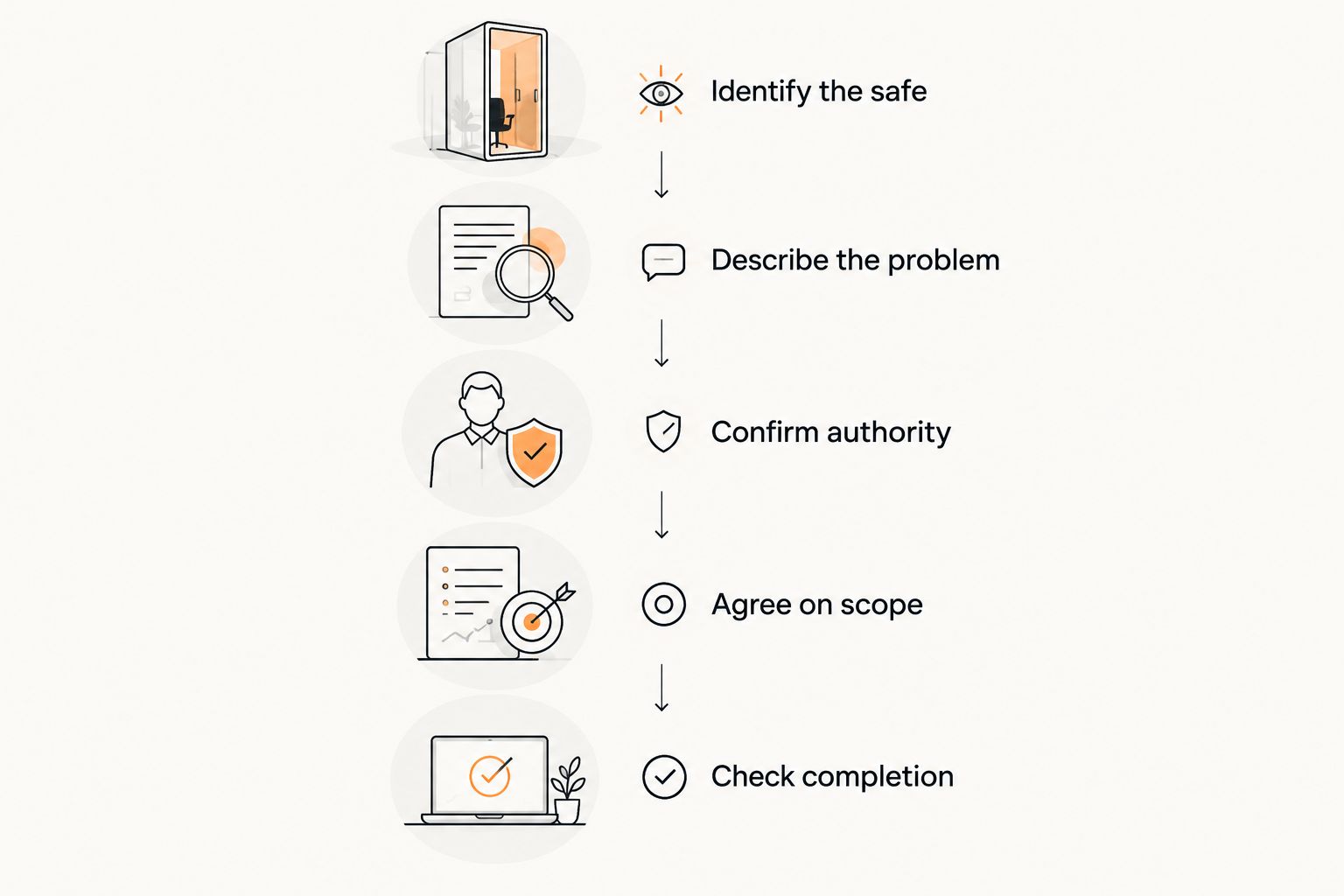
Confirm authority and the repair scope before authorizing work on a safe.
For a business safe, identify the person authorized to approve the work and sign the invoice. Being an employee with access to the building does not automatically establish authority to open or alter the safe.
For an inherited safe, ask about documentation before the appointment. Possession of the safe and legal authority over its contents are not always the same question.
What should a safe-opening estimate include?
Ask for an estimate covering the result you need, not just the moment the door opens. A narrow entry-only scope can leave restoration work unresolved.
Have the provider explain these items before you authorize service:
Whether the assessment and service visit are included in the stated scope.
Whether the proposed work is non-destructive or involves altering the safe.
What requires fresh approval if the initial approach does not work.
Whether lock repair, replacement parts, and repair of any opening work are included.
Whether setting and testing a new combination is part of completion.
What condition the safe will be in when the technician leaves.
Ask for changes to be explained before additional work begins. If you only need the contents retrieved, say so; if you intend to keep storing valuables inside, make restoration part of the discussion.
No general article can establish the right opening method from the word “safe” alone. The estimate should reflect your identified equipment and the specialist's assessment, not a promise made before anyone understands the job.
Can a locksmith open a safe without damaging it?
A safe specialist can sometimes open a safe without damage, but damage-free entry is not guaranteed. Ask whether a non-destructive approach is suitable and what happens if it does not succeed. Require approval before any agreed change to the method.
Can you reset a safe without opening it?
An external reset is not a universal recovery option. Follow the official instructions for your exact model; many combination-change procedures require authorized access and an open door. Do not confuse changing a known combination with recovering access to a locked safe.
Will the safe still work after it is opened?
Opening the safe does not guarantee that it is ready for continued use. The lock or safe body can require repair, and an existing mechanical problem can remain after entry. Agree on a separate completion check for any promised restoration.
Check the safe before putting valuables back
If the safe is being returned to service, ask the specialist to demonstrate the agreed operation with the door open where the model's instructions permit. Verify that the new combination works and that you understand the correct opening and locking procedure.
Check the written work description against what was completed. It should distinguish entry from lock replacement, combination changes, and repairs to the safe itself.
Ask whether the work affects any manufacturer warranty or protective rating. Do not assume an opened and repaired safe retains every original protection without model-specific guidance.
Store the new combination somewhere secure outside the safe. Keep the model information and service paperwork separately so another lockout does not also block access to the information needed for help.
Choose the right service for the locked item
Fastkeyrious is best for customers seeking its confirmed mobile vehicle, home, and business locksmith services; safe opening needs separate confirmation. A locked office entrance, a missing vehicle key, and a locked safe are different service requests.
Be precise when you call. Say whether the problem is a building door, a vehicle, or the safe itself, and do not assume that help with one establishes support for the others.
FAQ
Can a locksmith open a safe if I forgot the combination?
A locksmith with safe-specific experience can often open a safe when the combination is missing. The model, lock condition, and available recovery options determine the approach.
Should I call the safe manufacturer or a locksmith first?
Contacting the manufacturer first is useful when you can identify the model and document ownership. Ask whether an official recovery process exists; physical lock or door problems still require appropriate specialist assessment.
What proof do I need before someone opens my safe?
Ask the provider which identification and ownership or authorization documents are required. Business and estate situations can require documentation beyond the identification of the person making the call.
Can changing the batteries fix a safe that will not open?
Changing batteries helps only when power is the problem and the model's instructions call for it. Fresh batteries do not recover a forgotten combination or repair a mechanical fault.
Does opening a safe include a new combination?
A new combination is included only if it is part of the agreed work. Ask whether the scope covers entry, repairs, combination setup, and an operational check.
Does Fastkeyrious offer safe opening?
Safe opening is not a confirmed Fastkeyrious service. Its confirmed services include vehicle, home, and business lockouts, rekeying, car key replacement, and fob programming.
One last thing
An open safe is not the same as a repaired safe. Before authorizing work, finish this sentence with the provider: when the job is complete, the safe will be left in this condition. That single agreement makes the distinction between retrieving your belongings and restoring secure storage clear.